
The verdict
AI-generated generic editorial illustration — not a retailer product photo and does not depict the reviewed product or service. Editorial illustration supporting this section.
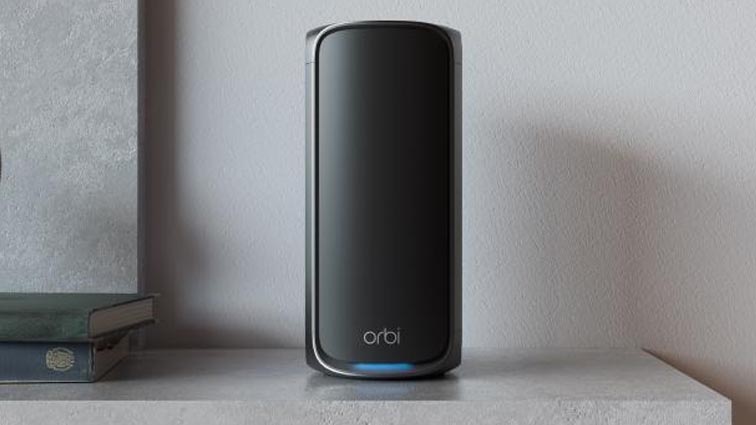
For UK households looking for a sensible place to start, investigate the NETGEAR Orbi 770. The supplied independent editorial evidence points to it most clearly: Expert Reviews called it the best-value Wi-Fi 7 mesh in its 2025 guide, and WIRED named it its best mesh system for most people in a 2026 guide. These are separate editorial judgements, not a shared head-to-head test, so use them to form a shortlist rather than as a promise of the best result in your home.
Your layout, building materials, broadband plan, wired devices and budget should shape the final choice. If large-home coverage, 10-gigabit wired connections, quad-band Wi-Fi or smart-home integration is a priority, compare the Orbi 970, ASUS ZenWiFi BQ16 and eero Max 7 against the Orbi 770. Expert Reviews also listed eero Max 7 as its best premium Wi-Fi 7 mesh; eero's product details here come from its official page. The listed speeds and coverage figures are not independently comparable results.
Shortlist: Wi-Fi 7 mesh systems to compare

This is a comparison guide, not a controlled product test. The independent recommendations support looking at the Orbi 770 first, while Expert Reviews places eero Max 7 in a premium category. Official pages explain the feature sets of the other options. Read the table as a way to decide what to check next, not as a measured ranking of all four systems.
| System | Why it merits a closer look | What the evidence establishes |
|---|---|---|
| NETGEAR Orbi 770 | Expert Reviews' best-value Wi-Fi 7 mesh in 2025; WIRED's best mesh for most people in 2026. | Two separate editorial recommendations, not one shared comparison. |
| NETGEAR Orbi 970 | A premium option NETGEAR positions for large homes, with quad-band Wi-Fi 7 and 10 Gigabit wired connectivity. | Manufacturer positioning and listed specifications. |
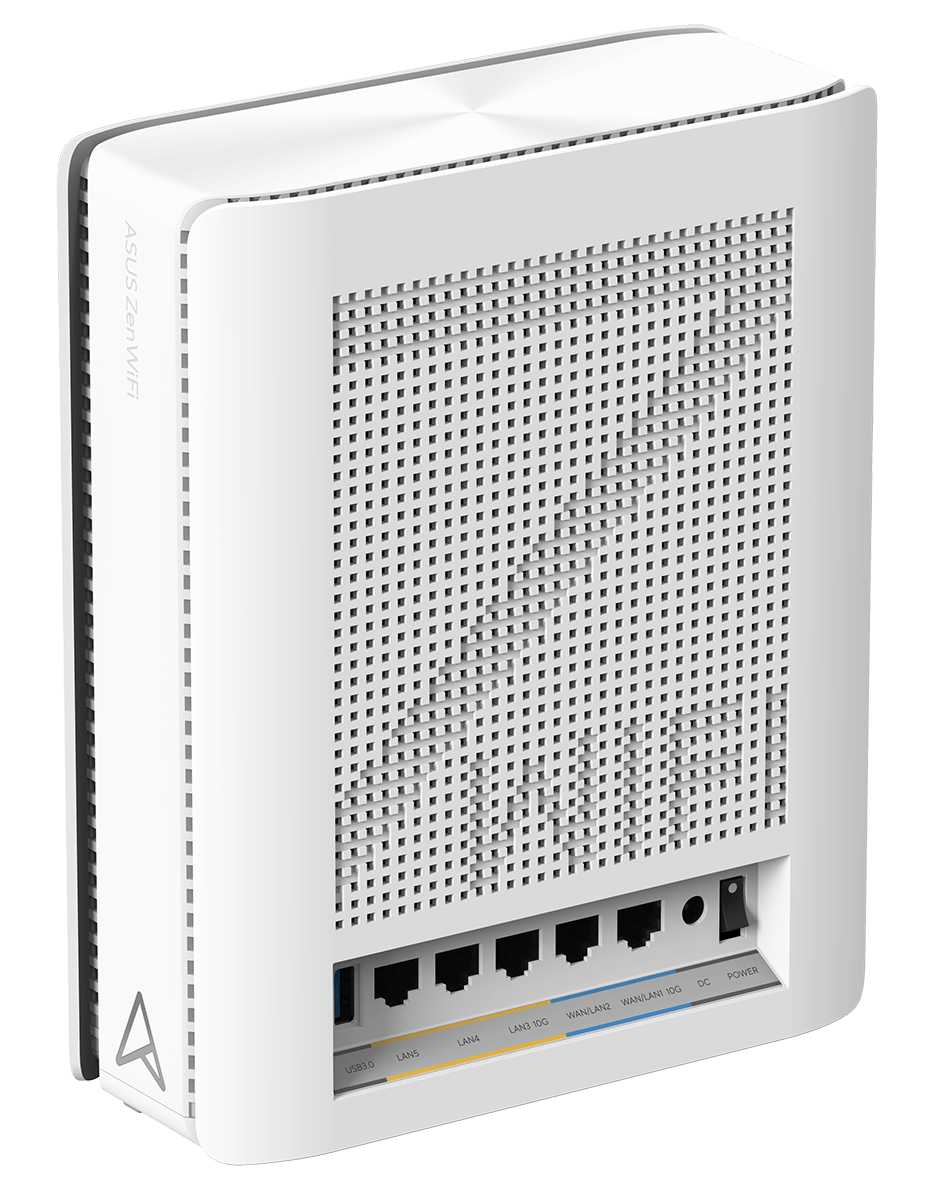
| ASUS ZenWiFi BQ16 | Quad-band Wi-Fi 7, dual 10G ports, and up to 8,000 sq. ft. stated for the two-pack. | Manufacturer-listed specifications for the named configuration. |
| eero Max 7 | Expert Reviews' best premium Wi-Fi 7 mesh in 2025; two 10 Gigabit Ethernet ports and smart-home hub functions. | Editorial category pick plus manufacturer-listed features and estimated coverage. |
Check the exact UK model code and pack before comparing prices or coverage. A two- or three-unit bundle is not the same configuration as a single router, and the figures above apply to the packs described by each manufacturer. Shortlisting by feature is useful, but it cannot tell you how well a signal will pass through the walls or floors of a particular house.
For a buyer who wants an editorial starting point, the Orbi 770 has the clearest support in these sources. For buyers whose priorities point elsewhere, the other three are comparison candidates because their official pages list relevant features. The evidence supplied here does not rank those three against each other or confirm their comparative performance in a typical UK home.
How Wi-Fi 7 mesh works in a home
A mesh system places multiple network nodes around a home and presents them as one Wi-Fi network. WIRED describes devices connecting to the nearest node, while NETGEAR's UK explainer describes mesh as creating a unified network for connected household devices. The practical reason to consider several nodes is to extend access beyond the area easily served by one router; the result still depends on the building and node locations.
The nodes need a connection among themselves, often called backhaul. NETGEAR describes the Orbi 970's Enhanced Dedicated Backhaul as using Multi-Link Operation (MLO) across multiple bands between the router and satellites. The company also says the system can use Ethernet connections for wired backhaul, including between a satellite and another satellite. This is an Orbi-specific vendor explanation, not a guarantee that every mesh system uses the same approach.
Wi-Fi 7 is a wireless standard; it does not specify the speed a device or household will actually receive. NETGEAR's explainer associates Wi-Fi 7 with the 6 GHz band, higher capacity and lower latency. Product-page totals may combine radio bands or describe a theoretical system maximum. Treat them as specification context, then check which bands, node links and wired ports are present on the exact pack you are considering. A headline number on a box is not a forecast for every room.
Where the Orbi 770 stands out
The Orbi 770's clearest advantage in this shortlist is the consistency of its editorial positioning. Expert Reviews, in a guide updated on 2 December 2025, labels it the best-value Wi-Fi 7 mesh. WIRED, in a guide dated 26 September 2026, calls the Orbi 770 Series its best mesh and says it is the best system for most people. That is converging support for investigating the product, especially if you want a mainstream starting point rather than a specialist feature set.
The two recommendations do not show that the Orbi 770 is best for every UK property. They come from different publications and different guides, and the supplied excerpts do not provide directly comparable test conditions or a shared set of UK homes. One label emphasises value, while WIRED's wording covers the product's fit for most people. Neither phrase establishes that the current local price, number of included nodes or feature mix is right for your household.
Use the endorsements as a reason to compare the 770 against your requirements, then check the current UK pack, availability and price. If those details fit, it is a well-supported candidate to investigate first. If you need a specific premium feature, wired port arrangement or smart-home capability, compare the alternatives on those concrete requirements instead of assuming that a broad editorial pick settles every decision.
Limits and trade-offs to check
Coverage and speed figures on product pages are manufacturer specifications or estimates, not promises about a particular household. The Orbi 970 page describes coverage for homes up to 8,200 sq. ft. and system speeds up to 27 Gbit/s; ASUS states up to 8,000 sq. ft. for the BQ16 two-pack; and eero lists up to 230 m² for one Max 7 unit. These differently worded figures should not be treated as a direct coverage contest. Pack size, layout and local conditions matter, and the supplied evidence does not establish directly comparable in-home results for all four systems.
The same caution applies to wireless speed and backhaul. NETGEAR says the Orbi 970's Enhanced Dedicated Backhaul uses MLO across multiple bands and describes a potential 10 Gbps across the system. Potential is a vendor statement about the technology; it does not mean every device will see 10 Gbps everywhere. The mesh explanation describes router-to-satellite connections and wired backhaul options, but the supplied evidence does not test every model side by side in UK homes.
Finally, feature counts do not tell you which option is economical. Compare the exact pack and the functions you will use, then weigh those against the price currently offered in the UK. Don't pay extra for quad-band radios, 10G ports or smart-home functions unless they solve a need in your network. Confirm model and bundle details before ordering because a page may show multiple pack sizes or editions.
Alternatives for different priorities
The Orbi 970 is the most feature-rich large-home option described in the supplied official information. NETGEAR positions it as a flagship for large homes and lists quad-band Wi-Fi 7, Enhanced Dedicated Backhaul and 10 Gigabit wired connectivity. Its UK product page also lists a three-pack with coverage up to 8,200 sq. ft. and system speeds up to 27 Gbit/s. These are manufacturer descriptions; use them to identify a system worth checking if you need the listed connections or a larger pack, not as independent proof of performance.
The ASUS ZenWiFi BQ16 may be worth comparing if you need dual 10G ports or want the features on its product page. ASUS lists quad-band Wi-Fi 7, two 10G ports and coverage up to 8,000 sq. ft. for the two-pack. The page also describes Smart Home Master features, multiple SSIDs, VPN and parental controls. Check the precise UK model and bundle: the stated coverage is attached to a particular pack, and a long feature list does not predict the signal in your floor plan.
The eero Max 7 is another candidate if its wired ports and smart-home support match your setup. eero lists two 10 Gigabit Ethernet ports and says the device works as a smart-home hub for Thread devices and as a controller for Matter and Zigbee devices. Its page gives coverage up to 230 m² for one unit, 460 m² for two, and 695 m² for three. Those are eero's pack-specific coverage figures, not independent measurements that can be directly compared with NETGEAR's or ASUS's estimates.
For all three, check whether the feature that caught your eye is included in the UK pack you intend to buy. Consider alternatives only where their listed capabilities map to an actual requirement: larger stated coverage, wired multi-gigabit connections, or the smart-home protocols you use.
How to choose for your home
Start with a rough map of the home. Note the floors, rooms where the current connection is weak, likely node locations and any constraints such as a router fixed near the broadband entry point. Then compare that layout with each manufacturer's pack options and coverage estimates. Treat an area figure as a planning clue rather than a guarantee; product pages do not know your walls, interference or placement.
Next, match the system to the connection and devices you already have. Check the broadband plan you pay for, whether you have computers, storage or other equipment that can use wired Ethernet, and whether a wired backhaul route between nodes is practical. If you are comparing Wi-Fi 7 features, check that the devices you care about can use them. Faster advertised system capacity alone does not upgrade an internet plan or make an older device faster.
Finally, write down the features that matter enough to pay for. These could include 10G wired ports, quad-band specifications, parental controls or support for a particular smart-home setup. Compare the Orbi 770 as the editorially supported starting point with the Orbi 970, BQ16 and Max 7 where their listed features fit. Before purchasing, confirm the current UK model, included node count, price and availability on the seller's page. Compare like-for-like bundles, and choose based on fit rather than the largest number in an advertisement.
How the evidence was assessed
This guide draws on two supplied independent editorial recommendations for the Orbi 770 and an additional Expert Reviews category recommendation for eero Max 7. Expert Reviews' 2025 guide identifies the Orbi 770 as its best-value Wi-Fi 7 mesh and eero Max 7 as its best premium Wi-Fi 7 mesh; WIRED's 2026 guide calls the Orbi 770 its best mesh system for most people. Those statements support the shortlist, but the excerpts do not establish that the publications used the same test method or compared these exact models under shared conditions.
For the Orbi 970, ASUS BQ16 and eero Max 7, this article reports features and coverage details from their respective manufacturer pages. NETGEAR's blog explains its own Wi-Fi 7 and Enhanced Dedicated Backhaul terminology and is treated as a vendor description. Manufacturer specifications are attributed as such; they are not recast as independent test findings. No hands-on tests were performed for this guide, and the supplied evidence does not establish a controlled comparison of all four products in UK homes. Check current product and pack details before buying.
Frequently Asked Questions
What is a Wi-Fi 7 mesh system?
It is a mesh network built around Wi-Fi 7 capable equipment: multiple nodes share a home network so devices can connect through a nearby node. WIRED describes this unified-network behaviour. NETGEAR's explainer describes Wi-Fi 7 in relation to the 6 GHz band and increased capacity, but the exact bands and performance depend on the product and connected devices. A system's aggregate advertised speed is not the speed every device will receive.
Does Orbi 970’s Enhanced Dedicated Backhaul guarantee 10 Gbps throughout a home?
No. NETGEAR says the Orbi 970 uses MLO across multiple bands for backhaul and describes a potential 10 Gbps speed across the mesh. That is the manufacturer's explanation of the feature, not a guarantee of 10 Gbps at every node or on each device. Placement, obstacles, client capability and whether you use Ethernet backhaul affect the connection you experience.
Should I choose a system based on its advertised coverage figure alone?
No. Coverage figures are manufacturer estimates tied to specific products or pack sizes. The supplied pages use different models and units, so the figures are not a direct comparison of how the systems perform in the same home. Use them to narrow pack choices, then consider your layout, floors, walls, node placement, broadband plan and devices. If possible, check the exact current UK bundle and its terms before purchase.
Sources
Related reading
- Best Wi-Fi 7 Routers for UK Homes
- Wi-Fi 7 vs Wi-Fi 6E: Is the Router Upgrade Worth It?
- Best Student Laptops in the UK for 2026
- Best Repairable Laptops for Longer Ownership
Editorial information: About our editorial team · Read our editorial policy · Read our affiliate disclosure.